Every creator — whether a blogger, podcaster, course creator, coach, or small business owner — eventually reaches the same turning point: How do I communicate consistently with my audience? And once you’ve built that audience, how do you turn attention into revenue in a way that doesn’t feel spammy or forced?
Two email marketing and engagement platforms often recommended to creators are Brevo and ConvertKit. Both are capable and popular, but they take very different approaches. Choosing the best one for you means understanding not just features and price, but how each platform supports your creative workflow and long‑term audience strategy.
This article provides a research‑based, practical, and comparative analysis of Brevo and ConvertKit with a clear focus on creators — from beginners to professional solopreneurs — so you can make a confident choice that supports your creative business goals in 2026.
Table of Contents
- Why Email Is Still the Core Channel for Creators
- Quick Overview: Brevo and ConvertKit
- Pricing Comparison
- Audience Management & Segmentation
- Automation Capabilities
- Content Monetization and Funnels
- Landing Pages & Forms
- Deliverability and Subscriber Experience
- Integrations and Ecosystem
- Creator‑Focused Tools & Resources
- Support, Learning Resources, and Community
- Side‑by‑Side Strengths and Weaknesses
- Who Should Choose Brevo
- Who Should Choose ConvertKit
- Final Verdict
1. Why Email Is Still the Core Channel for Creators
Before diving into comparison, it’s worth revisiting why email remains essential for creators:
- Direct Access: Unlike social platforms, you own your list — no algorithm decides who sees your content.
- Higher Engagement: Email attention — opens, clicks, replies — is more reliable than social engagement.
- Monetization Pathway: Creators can pre‑sell offers, launch courses, promote services, and nurture repeat buyers directly via email.
- Personalized Communication: Email allows hyper‑targeted messaging based on behavior, preferences, and history.
Both Brevo and ConvertKit aim to serve these core needs; the difference is how they support you as a creator.
2. Quick Overview: Brevo and ConvertKit
Brevo
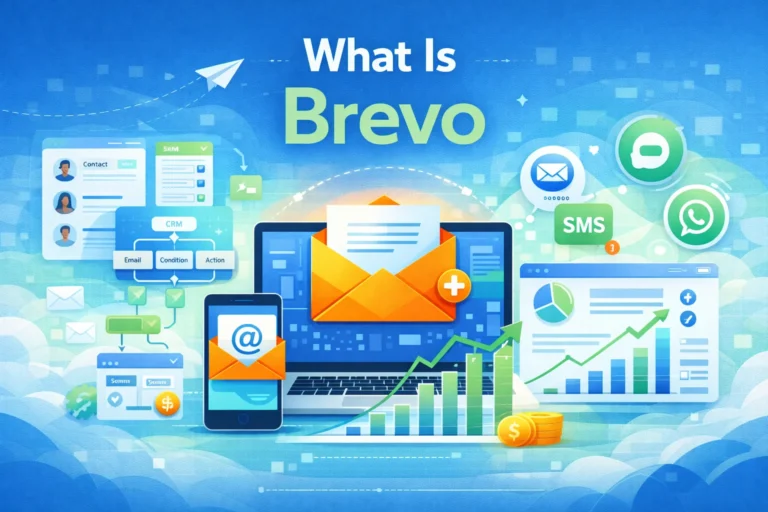
Brevo (formerly Sendinblue) is an all‑in‑one marketing platform focused on email marketing, automation, multichannel messaging (SMS, WhatsApp), CRM features, and transactional messaging. Its pricing is volume‑based (emails sent) rather than subscriber count, which can be a major advantage for creators with large lists but low sending frequency.
Brevo excels at:
- Affordable email sending
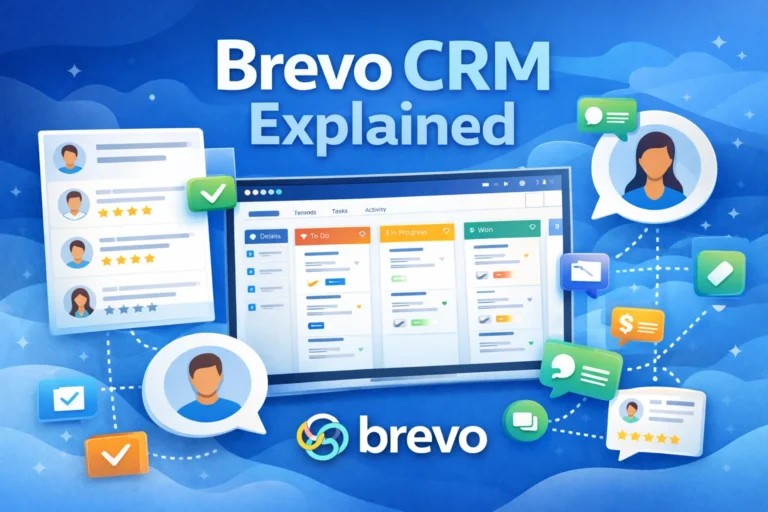
- Integrated CRM
- Multichannel communication
- Simpler automation
It’s a good choice when you want versatility and scalability without premium costs.
ConvertKit
ConvertKit was built specifically for creators. Its mission is to help authors, bloggers, YouTubers, and course creators grow and monetize audiences using email. ConvertKit prioritizes simplicity and creator‑friendly workflows over complex feature menus.
ConvertKit excels at:
- Creator‑centric features
- Tag‑based audience segmentation
- Simple but powerful automation
- Monetization through digital products and subscriptions
ConvertKit’s core value is helping creators build relationships and earn money directly from their audience — not just send emails.
3. Pricing Comparison
Budget is often a deciding factor for creators who may have irregular revenue.
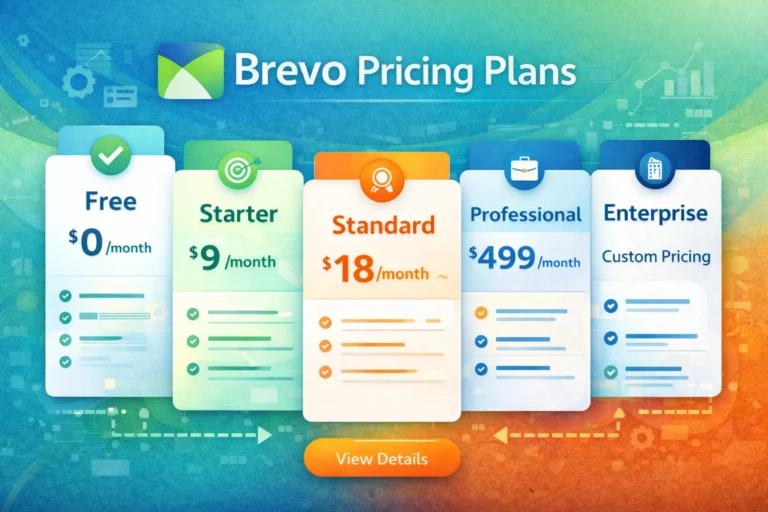
Brevo Pricing (2026)
Brevo’s pricing is based on email volume rather than contacts:
- Free Plan
- Up to ~9,000 emails per month (300/day)
- Unlimited contacts
- Basic automation and campaign tools
- Brevo branding
- Starter Plan (~$9–$12/month)
- Increased monthly email volume
- Core email features
- Standard Plan (~$18–$29/month)
- Marketing automation
- A/B testing
- Landing pages
- Professional Plan (~$449/month)
- Advanced automation
- Predictive segmentation
- SMS/WhatsApp messaging
- Enterprise Plan Custom pricing
Key Benefit: Creators can grow large lists without paying more — ideal for seasonal creators or newsletters with long‑tail engagement.
ConvertKit Pricing
ConvertKit uses subscriber‑based pricing, which means your cost increases as your list grows:
- Free Plan
- Up to ~1,000 subscribers
- Unlimited landing pages
- Basic automations
- Creator Plan (~$15–$29/month based on list size)
- Email sequences
- Tag‑based automations
- Creator Pro (~$59–$99+)
- Advanced reporting
- Newsletter referral system
- Priority support
Key Trade‑Off: Cost grows quickly as your audience increases, especially if you need advanced automations.
4. Audience Management & Segmentation
Effective segmentation is the backbone of personalized broadcasts and sequences.
Brevo Segmentation
Brevo provides:
- List and segment creation
- Tagging based on behavior
- Custom fields for subscriber attributes
This gets the job done for basic personalization — but it can be less intuitive than ConvertKit’s tagging logic.
ConvertKit Segmentation
ConvertKit’s segmentation is foundational to its design:
- Tag‑based system (very flexible)
- Subscriber segments without duplicates
- Easily add or remove tags based on actions
- Elegant visual segment builder
Tags and segments in ConvertKit feel natural for creators who want emails personalized based on:
- Link clicks
- Course purchases
- Subscriber interests
- Workshop attendance
For creators who rely on behavioral targeting, ConvertKit’s audience management feels smoother and more intuitive.
5. Automation Capabilities
Automation is where long‑term audience growth really starts to scale.
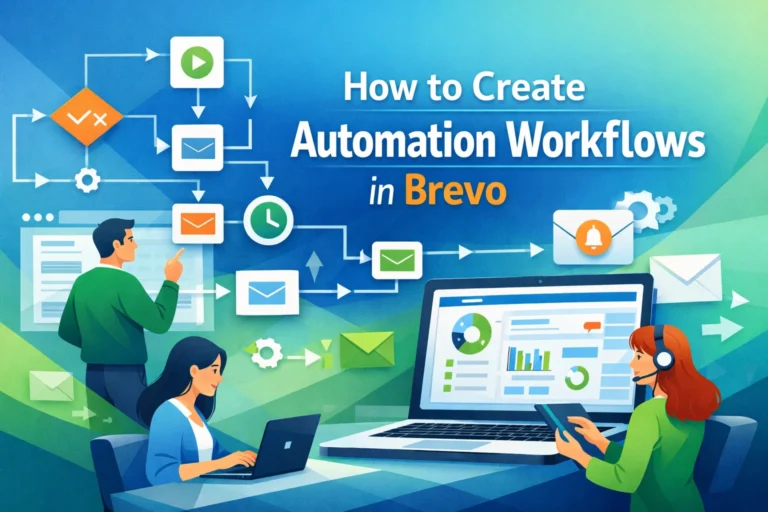
Brevo Automation
Brevo includes:
- Visual workflow builder (drag‑and‑drop)
- Triggers based on subscription, opens, clicks
- Actions such as sending emails or updating tags
- CRM events integration
Automation in Brevo works well for common use cases like:
- Welcome series
- Abandoned cart follow‑ups (if ecommerce connected)
- Re‑engagement flows
Strengths:
- Easy to set up
- Integrated CRM triggers
Limitations:
- Less depth in conditional branches
- Fewer creator‑specific triggers
ConvertKit Automation
ConvertKit’s automation builder is one of its standout features:
- Visual automation builder optimized for creators
- Action and condition blocks that are intuitive
- Tag‑based sequencing
- Ability to create complex journeys without coding
- Sequences triggered by behavior and tag changes
ConvertKit automation is designed with creators in mind, often reducing the need for multiple third‑party tools.
Examples:
- Educational drip series
- Course onboarding
- Milestone‑based automations
- Product recommendations
ConvertKit combines simplicity with meaningful automation depth without overwhelming menus.
6. Content Monetization and Funnels
Monetization matters for creators — email isn’t just communication, it’s a revenue channel.
Brevo
Brevo does not include native product selling or digital product options; monetization requires integration with ecommerce platforms, third‑party tools, or manual links to stores.
Brevo’s strength is in automation and list management — monetization is more of a connected workflow than built‑in functionality.
ConvertKit Monetization Tools
ConvertKit shines here:
- Sell digital products directly
- Built‑in subscriptions and memberships
- Integrated purchase tagging
- Creator‑specific revenue reports
- Seamless checkout without external storefronts
Creators can use ConvertKit to:
- Sell ebooks
- Launch courses
- Launch membership subscriptions
- Automate revenue tagging and follow‑up
This directly supports income generation within the same platform you use for audience building.
7. Landing Pages & Forms
Landing pages and forms are essential for growing subscribers.
Brevo
Brevo includes:
- Drag‑and‑drop page builder
- Templates for opt‑ins and lead capture
- Integration with automation and CRM
- Simple conversion tracking
These landing pages are functional and effective — ideal for collecting leads.
ConvertKit
ConvertKit offers:
- Designer landing page templates optimized for creators
- Minimalist designs focused on conversion
- Embedded forms for blogs and sites
- Flexible call‑to‑action placement
Many creators appreciate ConvertKit’s clean design aesthetic that doesn’t require a separate page builder or design skills to look professional.
8. Deliverability and Subscriber Experience
Deliverability affects whether your emails land in inboxes instead of spam.
Brevo Deliverability
Brevo invests in:
- Domain authentication (SPF, DKIM)
- Dedicated IPs on higher plans
- Compliance with global email regulations
- Smart sending infrastructure
Deliverability can be strong if lists are clean and engagement is high.
ConvertKit Deliverability
ConvertKit is also reputable for:
- High deliverability scores across industries
- Encouragement of best practices (double opt‑in, clean lists)
- Reputable sending domains
Many creators report consistent inbox placement with ConvertKit campaigns, especially when lists are engaged and segmentation is active.
9. Integrations and Ecosystem
Both platforms offer integrations, but their focus differs.
Brevo Integrations
Brevo connects with:
- Shopify
- WooCommerce
- WordPress
- Zapier
- CRM tools
- Analytics platforms
Brevo can fit into a broader stack, but integration depth varies.
ConvertKit Integrations
ConvertKit integrates with tools many creators rely on:
- Teachable / Thinkific
- Patreon
- WordPress
- Shopify
- Zapier
- E‑commerce and course platforms
These integrations are often creator‑centric, making workflows smoother.
10. Creator‑Focused Tools & Resources
Brevo Resources
Brevo offers:
- Knowledge base
- Tutorials
- Support articles
- Webinars (occasionally)
Resources are solid, but support is more generalized — not always creator‑specific.
ConvertKit Resources
ConvertKit stands out with:
- Creator‑focused tutorials
- Community challenges
- Script libraries
- Podcast and blog content tailored to creators
ConvertKit’s resource ecosystem feels built for creators, not just marketers.
11. Support and Community
Support is crucial when campaigns matter and deadlines loom.
Brevo Support
Brevo provides:
- Email and ticket support
- Live chat on higher plans
- Documentation and articles
Support quality can vary by plan level.
ConvertKit Support
ConvertKit offers:
- 24/7 support on many plans
- Interactive live chat
- Community forums with creators helping creators
- Creator coaching on higher tiers
ConvertKit’s support ethos is firmly focused on helping creators succeed.
12. Side‑by‑Side Strengths and Weaknesses
Brevo Strengths
✔ Affordable email volume pricing
✔ Unlimited contacts even on free plan
✔ Integrated CRM and multichannel messaging
✔ Solid automation for general marketing workflows
✔ Functional landing pages and forms
Brevo Weaknesses
✘ Not built specifically for creators
✘ Monetization tools require third‑party add‑ons
✘ Automation lacks some advanced creator‑centric triggers
ConvertKit Strengths
✔ Designed specifically for creators
✔ Tag‑based segmentation that feels intuitive
✔ Strong automation built around creator use cases
✔ Built‑in monetization (digital products, subscriptions)
✔ High deliverability with creator‑friendly tools
ConvertKit Weaknesses
✘ Pricing rises quickly with subscriber count
✘ Fewer multichannel options (SMS, WhatsApp)
✘ Less CRM depth outside email focus
13. Who Should Choose Brevo?
Brevo is a strong choice if you:
- Want affordability and predictable costs
- Need integrated CRM or multichannel messaging
- Are building large contact lists but send selectively
- Want flexible workflows without premium pricing
- Prefer a broader marketing toolkit beyond creator features
Good fit: Small businesses, ecommerce, agencies, general email marketers.
14. Who Should Choose ConvertKit?
ConvertKit is the best choice if you:
- Are a creator focused on audience building
- Sell digital products, subscriptions, or courses
- Want deep but accessible automation
- Prioritize segmentation and journeys tailored to subscriber behavior
- Want a platform that grows with your creator career
Good fit: Bloggers, podcasters, coaches, course creators, influencers.
15. Final Verdict
If you are a creator looking for simplicity, strong built‑in monetization, intelligent automation, and an audience‑centric workflow, ConvertKit is generally the better choice in 2026 — especially if your income depends directly on course sales, product launches, or subscription models.
If you are a small business owner or creator who values affordability, multichannel messaging, CRM features, and need email automation integrated with broader tools, Brevo is compelling — particularly when your contact list will grow and you want predictable pricing.
Both platforms are powerful and capable. The best choice depends on your business model, budget, and whether your focus is building an engaged creator community or orchestrating complex marketing workflows at scale.
FAQ’s
1️⃣ What is the main difference between Brevo and ConvertKit for creators?
The main difference is focus and specialization. Brevo is a versatile marketing platform with CRM, email, and multichannel messaging, suitable for small businesses and creators seeking affordability. ConvertKit is designed specifically for creators, with tag-based segmentation, creator-focused automation, and built-in monetization tools for selling digital products or subscriptions.
2️⃣ Which platform is better for beginner creators?
ConvertKit is generally more beginner-friendly for creators because its workflows and automation are intuitive and tailored for audience growth. Brevo is simple for basic automation but may require more setup for creator-specific monetization.
3️⃣ Can I sell digital products directly with Brevo and ConvertKit?
- ConvertKit supports selling digital products, subscriptions, and memberships directly through the platform.
- Brevo does not have native digital product selling, so creators must integrate with ecommerce platforms or use external checkout tools.
4️⃣ How do the pricing models differ for creators?
- Brevo charges based on email volume, not subscriber count, which makes it cost-effective for large lists that send fewer emails.
- ConvertKit charges based on subscriber count, which can become expensive as your audience grows, but includes creator-focused features like monetization and automation.
5️⃣ Which platform has better automation for creators?
- ConvertKit offers creator-centric automation with visual workflows, conditional logic, and tag-based triggers ideal for courses, newsletters, and product launches.
- Brevo provides solid automation for general marketing tasks but has less advanced creator-specific workflows.